Unified Financial Tracking for a Fintech SaaS Platform
Reducing fragmented workflows through a unified financial platform
Problem Statement
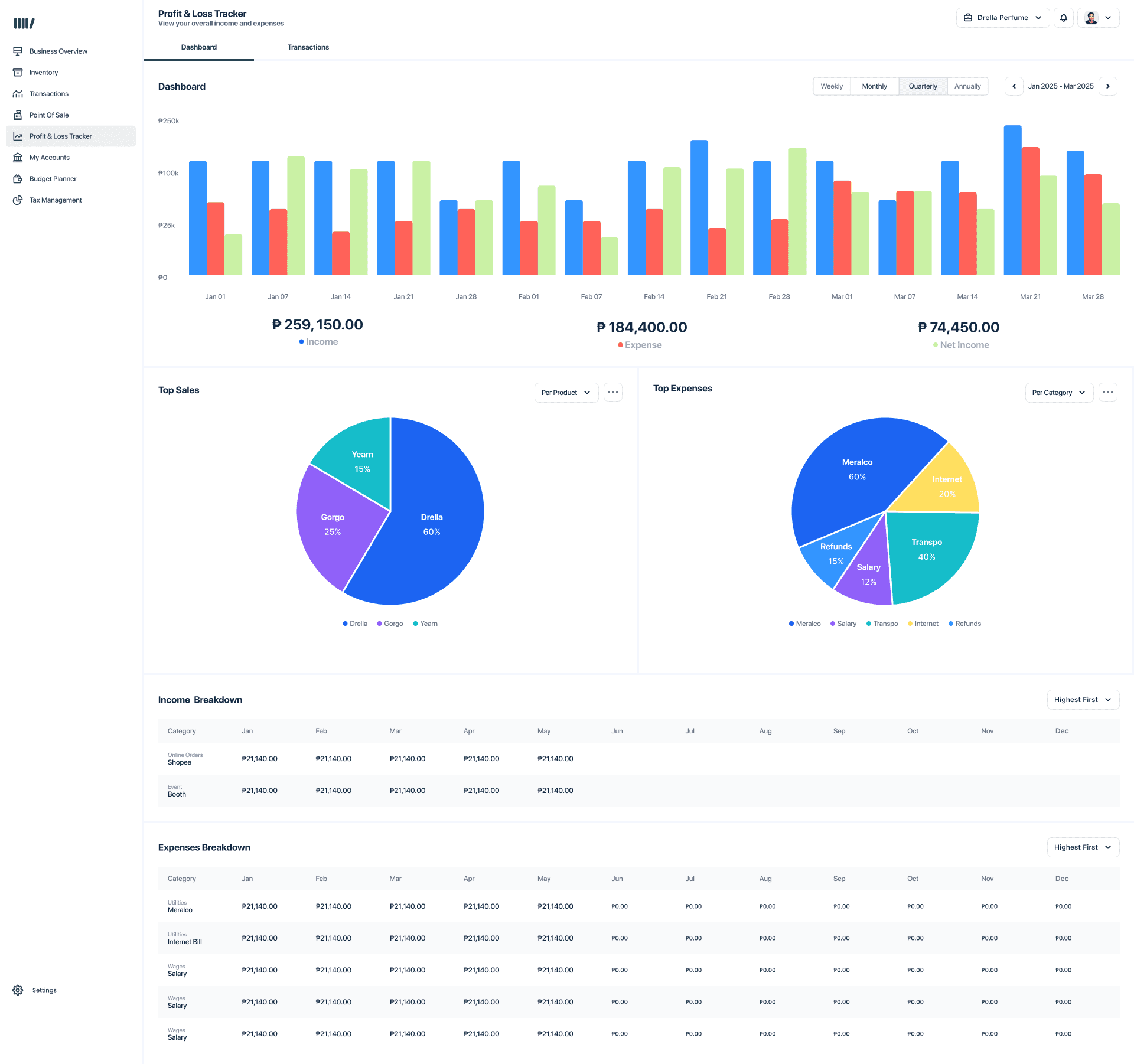
Users lack a single, trustworthy view of their financial data, forcing them to manually reconcile information across apps, spreadsheets, and bank statements. This creates uncertainty, avoidance, and inconsistent tracking behavior.
Role & Responsibilities
Role: Product Designer
Product Type: Fintech SaaS (Web)
Users: Freelancers & Small Business Owners
Timeline: Concept to MVP Definition
Team: Solo designer
Goals
Define a unified financial tracking experience that:
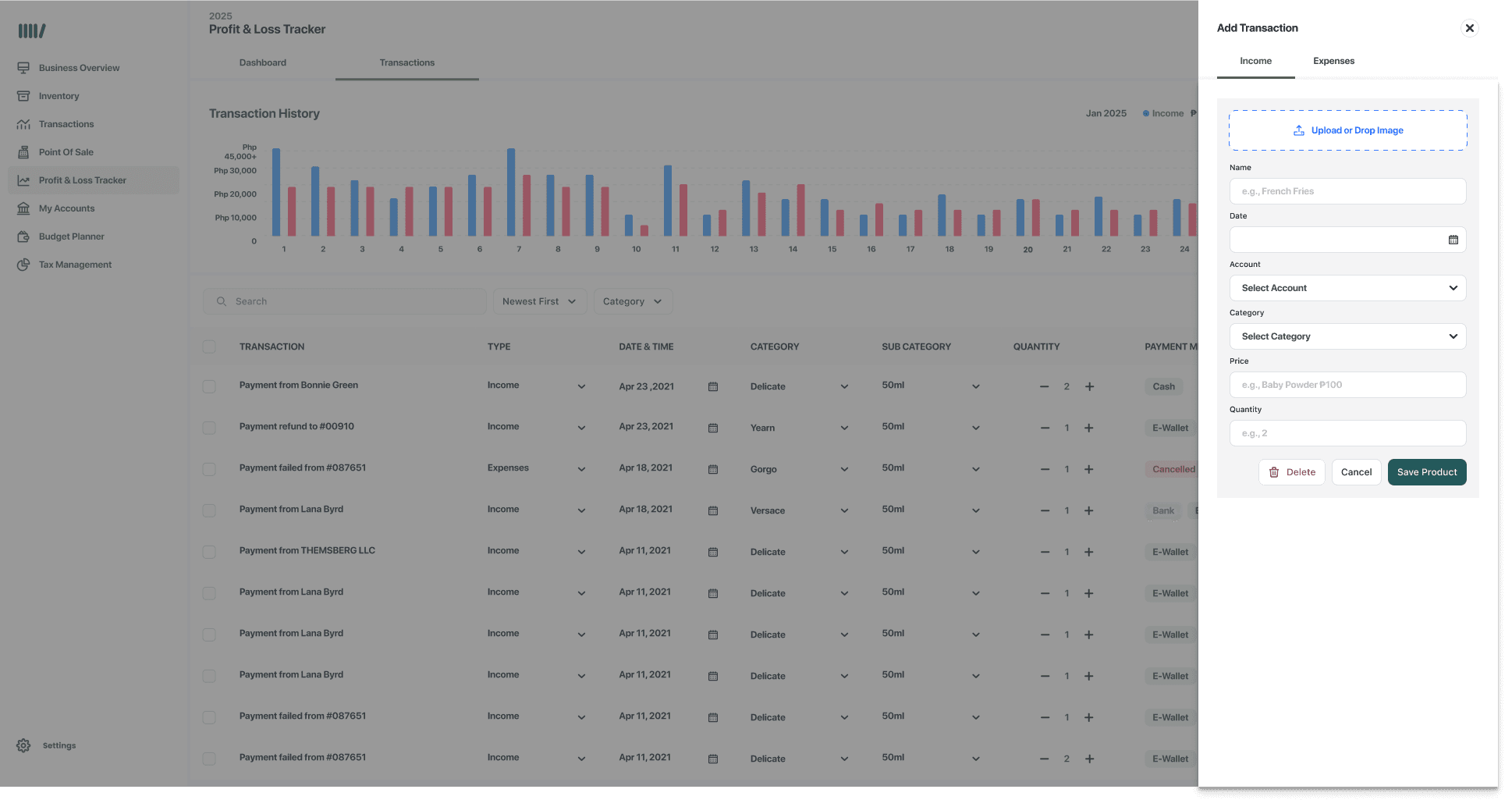
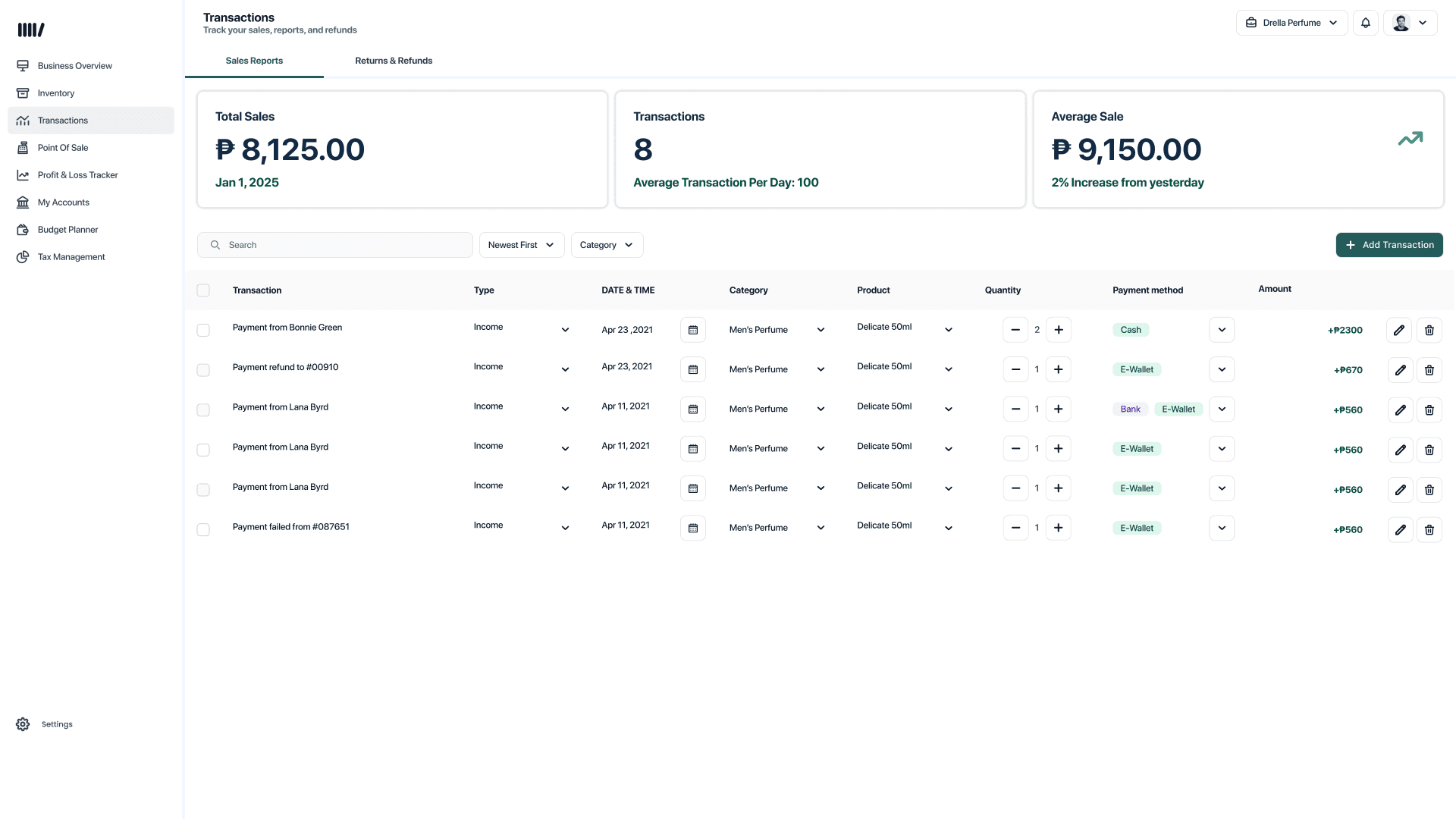
Enables fast, low-effort daily logging
Builds trust through transparency and user control
Scales across both personal and business financial needs
Research Approach
This project used directional qualitative research to uncover behavioral patterns and decision drivers.
6 in-depth interviews with freelancers and small business owners
Focus on workflows, pain points, and trust perceptions
Research concluded once core themes reached saturation
The objective was not statistical validation, but to inform product direction and MVP scope.
Key Insights
Fragmentation is the core pain point - Users track finances across multiple tools, increasing mental overhead and reconciliation errors.
Daily use must remain lightweight - Dense dashboards discourage consistency; users prefer fast, repeatable actions.
Primary User Archetype
Financially Self-Managed Operator
This archetype represents the dominant behavioral pattern observed across interviews.
Manages both personal and business finances independently
Values clarity and predictability over advanced analytics
Seeks visibility without requiring accounting expertise
This archetype guided prioritization and tradeoffs rather than serving as a demographic persona.
Primary Journey
Daily income and expense tracking
Drives habitual use and data accuracy.
Secondary Journey
Cash flow review
Savings visibility
Design Decisions & Rationale
Unified Financial View
Why: Fragmentation led to distrust and avoidance.
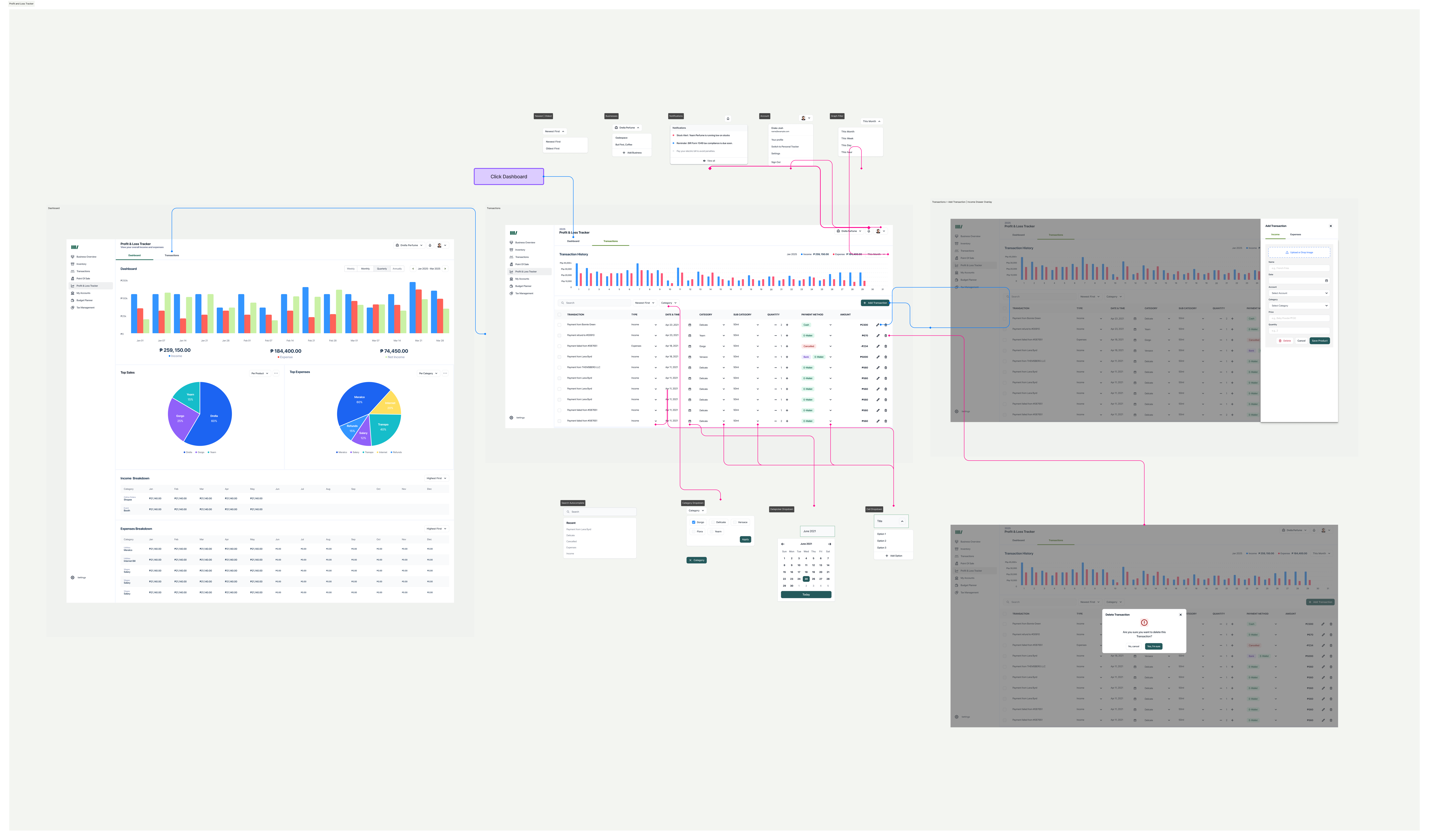
Outcome: Consolidated income, expenses, and savings into a single system view.
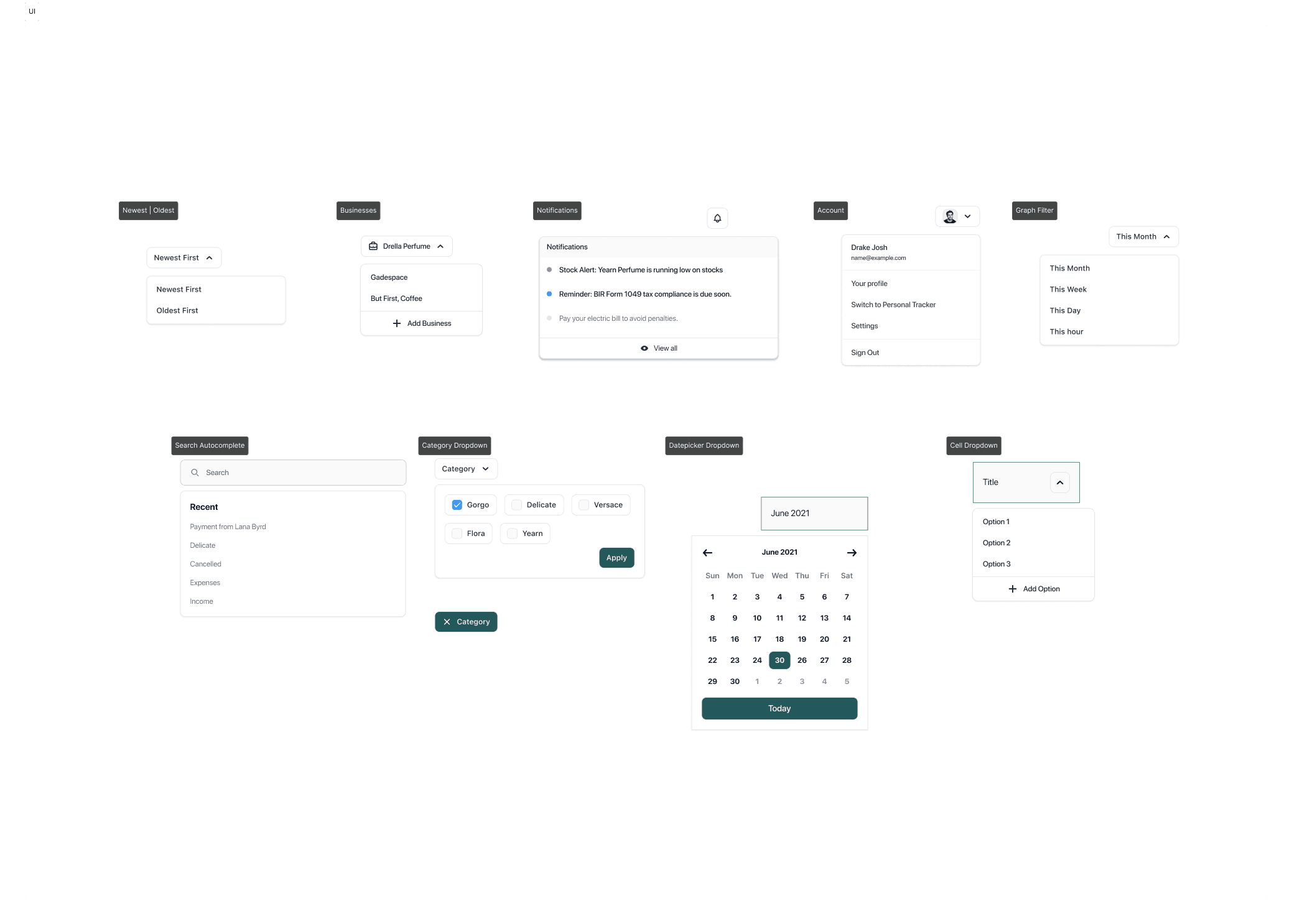
Manual Control Over Automation
Why: Users distrusted opaque auto-categorization.
Outcome: Enabled editable categories and transparent logic to build confidence.
Lightweight Daily Actions
Why: Complex dashboards reduced engagement.
Outcome: Prioritized fast entry and simple summaries over dense analytics.
MVP Feature Strategy
Included
Unified income and expense tracking
Editable categorization
Basic cash flow visibility
Savings overview
Intentionally Excluded
Investment tracking
Advanced forecasting
Complex financial reports
Cross-Functional Considerations
Engineering: Scoped features to reduce data reconciliation complexity
Trust & Compliance: Avoided manual calculations to maintain user confidence
Scalability: Designed patterns extensible to future business features
Outcome
This project established a clear MVP direction grounded in user behavior and business risk. The resulting strategy prioritized trust, consistency, and simplicity, creating a strong foundation for long-term engagement rather than feature density.
All rights reserved © 2026
Romel Galorio